

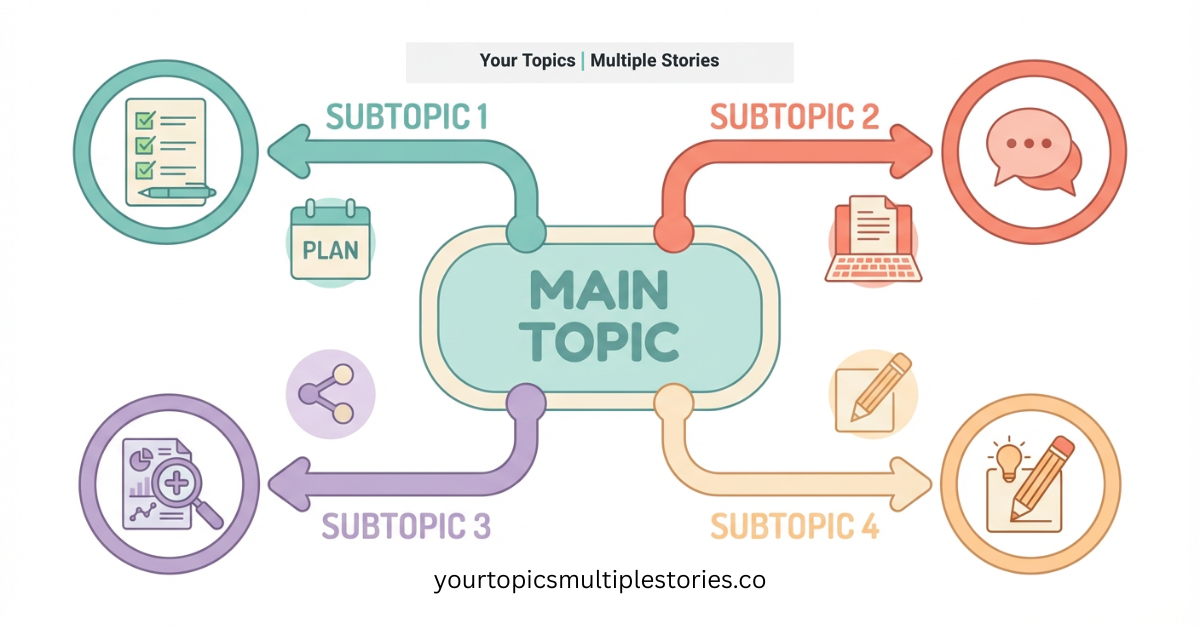
You face a big problem when you write content today. The internet is full of noise. All search results look much the same. Most articles try to tell you the final answer but only give you a small, flat view. Readers leave your site feeling lost. Search engines cannot tell if you are a real expert. Your writing can easily get lost in the noise.
Stop filling the internet with low quality writing. You need a new way to work.
This is where the Your Topics | Multiple Stories plan helps you win. You stop trying to chase every popular word. Instead, you pick just one strong topic. Then you look at it from many different sides. You use different types of content. This deep work helps readers trust you. It makes search engines see you as an expert. This plan is the only way for you to do well in the next few years.
You must change your approach now. Writing thin, simple content is over. The future of writing needs depth, many views, and real experience. Use this plan to succeed.
The Core Idea What Your Topics Multiple Stories Means
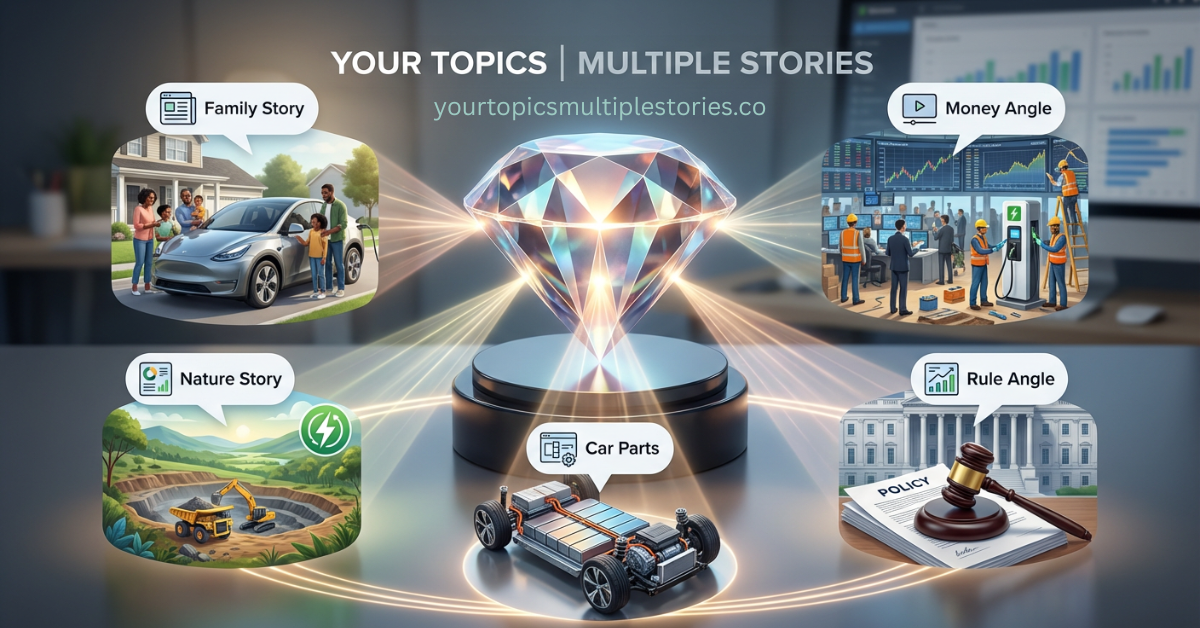
The main idea is simple. You take one main subject and split it into several short, connected stories. You are not writing five random posts. You are writing five linked stories about the exact same subject. Think of it like a beautiful shiny rock. That rock is your topic. If you only look at one side, you see little. The Your Topics | Multiple Stories plan turns the rock slowly. It shows how the rock shines in every light.
This multi story plan changes how you write. It changes how people read your work. It helps you give a full picture. It moves past simple words. It helps people truly understand the subject.
You must see your topics as ideas with many layers.
The Core Idea What Your Topics Multiple Stories Means
Look Beyond One Angle
Every subject has many truths. Think about the topic Electric Cars.
A simple look only talks about the car's parts. The article talks about battery power, charge time, and speed. This brings only one kind of reader, maybe the car lover or the engineer.
A multi story plan covers:
-
The Family Story: One family's life after buying an electric car for the first time. Talk about the feeling, the money saved, and the small problems they face daily.
-
The Money Angle: A look at how electric cars change the global oil market and the need for new jobs like mechanics and charging station builders.
-
The Rule Angle: A check of government aid, new laws, and how current rules help or hurt the sale of electric cars.
-
The Nature Story: A close look at where battery materials come from. Talk about how the car truly affects the environment over its whole life.
Each story is a unique piece of writing. Each piece is for a slightly different person. But all of them go back to the main topic. This strong, linked plan makes your content very strong. It shows you know the subject totally. You help many different people with one powerful content system.
You create a large meal with many plates, not just one simple food. Every plate is good. Every plate fits the meal's theme. Your audience loves the choice.
Three Key Steps for Multi Story Success
The whole plan needs three main parts that you must follow well.
First is Many Views. You must look for ideas that are different or even fight each other. If your topic is saving money, write a story from a student who is learning to save for the first time. Then write another story from an old person who must manage money they already have. These different views help your writing reach more people. You talk to everyone, not just one group.
Second is Different Formats. Do not write only text stories. Write a long blog post. Make a short video interview with an expert for another story. Draw a chart to show the numbers for a third story. Use the format that works best for the message. Complex data is better in a video or chart. Strong feelings are best in a personal essay.
Third is One Main Theme. All stories must stick to the same center. If you lose focus, the whole plan falls apart. The stories must link together well. Use strong links to other stories on your site. Finish each story by saying how it helps the main idea. You must make the link very clear for the reader.
The 2026 Plan Get Ready for New Search Rules
You must think about the future of search. The computer rules for searching are always changing. They are moving away from just checking words. They are moving toward finding real quality, helpfulness, and trust. This focus is getting stronger. The predicted 2026 changes bring one big truth. Your content must be helpful, trustworthy, and show real experience.
The Your Topics Multiple Stories plan is not just a writing game. It is the perfect way to protect your content from the expected major rule changes in 2026. It is the best way to show your site should rank highly.

The 2026 Plan Get Ready for New Search Rules
Ace E E A T and the 2026 Need
Google looks at E-E-A-T (Experience, Expertise, Authoritativeness, and Trustworthiness) to judge content quality. The multi story plan naturally meets all four parts in ways that simple content cannot.
-
Experience: Simple stories often rely on quick looks and second hand facts. Multi stories need you to tell tales from many angles. This makes you show real firsthand experience or interview people who have it. For example, if your topic is home solar power, one story must feature someone who really did the work. That person talks about the paperwork, the hidden costs, and the daily life of owning solar. You show real world Experience.
-
Expertise and Authoritativeness: By writing about one topic in many ways, you show deep knowledge. You prove how much you know. A writer who writes four linked, well researched stories about a topic is seen as a much bigger Expert than one who writes just one quick look. This number and variety show real Authoritativeness on the subject.
-
Trustworthiness: Your ability to present hard topics fairly, by showing different views and problems, builds trust. You avoid only showing one side of a fight. This balanced view makes you a very Trustworthy source of information.
The 2026 updates will reward writers who act like true subject matter experts. You cannot fake this authority. You must build it, one piece at a time, one story at a time.
The People First Content Rule
The 2026 update which means the big, expected search rule change will greatly reward People First Content. This is content made mainly to help people, not just to rank higher. You must ask a simple question. Did I write this to truly help a person or just to get a higher search spot?
The multi story plan fits perfectly with the People First idea. You are not writing one general piece hoping to rank for many words. You are writing five very specific stories made to solve the problems of five different types of readers.
-
A student needs a history story.
-
A business owner needs a story on money impact.
-
A politician needs a story on rules and laws.
By meeting these real, human needs, your content becomes very helpful. You make the reader happy. You ensure the reader feels they got what they needed after reading your work. Search engines see this happiness. They give it a high score.
How to Build the Multi Story Plan A Simple 5 Step Guide
To use this strong plan, you must plan carefully. You must move past quick ideas and use a clear, step by step process. You cannot succeed by just writing whatever you feel like. You need a map. Follow these five steps to build your multi story content plan.
Step 1 Pick a Big Topic
The first mistake people make is picking a topic that is too small. A multi story plan needs room to grow. The topic must be big enough to support at least three to five unique stories and views.
-
Bad Topic: The best running shoes for a race. (Too small)
-
Good Topic: How the Human Body Works to Endure Stress. (Big topic)
Once you pick the big topic, decide on the main idea you want to share. What is the one big message? For How the Human Body Works to Endure Stress, the message might be Endurance is more about the mind than the body. Every story you write after that must help prove this main idea.
Step 2 Find Your Readers
Who are the different groups of people who care about your main topic? You must name these groups clearly. This choice tells you which story angles to use.
| Core Topic | Reader Group 1 | Reader Group 2 | Reader Group 3 |
| Computers in Schools | The Teacher (Needs stories on how to use them in class) | The Parent (Needs stories on ethics and safety) | The Programmer (Needs technical plans and roadmaps) |
| Growing Food in the City | The City Planner (Needs stories on laws and city needs) | The Local Person (Needs stories on personal gardening and neighbors) | The Investor (Needs stories on money plans and how to grow the idea) |
Do not guess what these groups want. You need to study them. What are their biggest worries? What words do they use? What questions do they ask online?
Step 3 Choose Story Angles and Views
Now you give a unique story angle to each reader group. The angle must be different in its focus, feeling, and type.
-
Angle A The Personal Story: Focus on feelings, struggle, and human success. Use a first person story or a deep interview.
-
Angle B The Numbers Story: Focus on facts, charts, and research findings. Use a formal, report style look and feel.
-
Angle C The History Look: Focus on how the topic started and changed over time. Use timelines and old examples.
-
Angle D The Future Look or Big Question: Focus on moral questions, what might happen next, and different expert views. Use a debate style or a clear guess about the future.
These angles must challenge each other but still stick to the main theme. For example, a personal story about a big technology win (Angle A) can be next to a moral debate about the technology's risks (Angle D). Both help people fully understand the topic.
Step 4 Pick Different Story Types
Do not be boring. Your multiple stories should use many types of content. This helps people stay interested. It works for different ways people learn.
-
Long Text Post: The final analysis or the history piece.
-
Video Content: Interviews, short talks, or documentary style pieces for the Personal Story.
-
Charts and Data Pictures: Perfect for the Numbers Story.
-
Podcast or Audio: Good for an easy going moral debate or an expert talk.
-
Tools You Can Use: A quiz, a calculator, or an interactive map can be a story itself. It shows a reader their personal result related to the topic.
You cannot just link five text posts. You must link five different, very valuable pieces of content.
Step 5 Make a Clear Story Map
You need a clear plan for how the audience will read your stories. Make a map. This map should show the path.
-
The Main Piece: This is your first, best piece. It names the core topic and says you will look at many stories. It acts as the center hub.
-
The Satellite Pieces: These are the multiple stories (A, B, C, D). They link strongly back to the Main Piece.
-
The Connectors: Use links inside the satellite pieces to connect them to each other when it makes sense. For example: "The law problem (in Story C) directly changes the money results talked about in our Investment Story (Story B)."
This structure creates what search experts call a Topic Cluster or Pillar Content. It shows search engines that you cover the whole topic. This is a huge SEO benefit.
Get Big Results from Deep Content
The multi story plan is the best way to get long term SEO success and keep your audience interested. You stop working for simple words. You start working for long term value.
Deep SEO by Answering All Questions
When a person searches, they often have mixed or complex needs. The simple story often only meets one need.
-
Search 1: "How do I start composting at home" (Need for steps and facts)
-
Search 2: "Is composting worth the hard work" (Need for debate and value)
-
Search 3: "Composting money benefits" (Need for money facts)
If you only have one post on composting, it tries to answer all three, often badly.
The Your Topics Multiple Stories plan lets you make three separate, very focused stories that perfectly match each search need. Your Steps and Facts Story ranks for Search 1. Your Value Debate Story ranks for Search 2. Your Money Impact Case Study ranks for Search 3. You become the top result for the whole topic area. You get massive visibility.
This plan leads to:
-
Better Ranking for Long Phrases: The clear focus of each story naturally targets niche long search phrases that lead to high action.
-
More Time on Site: Readers spend more time on your site, moving from one related story to the next. They trust what you say. They know you show the full picture.
-
Lower Bounce Rate: Because you offer the perfect next piece of content for a related question, readers stay on your site instead of going back to the search results page.
You are not just getting clicks. You are becoming the topic leader.
Build Real Trust
Simple topic coverage is only for the mind. Multiple stories are for the mind and the heart. Trust is the glue that keeps audiences close. It is the secret to great writing.
Stories about struggle, success, or personal thoughts are easy to remember. They make a deeper bond with the reader. When you include the Human Story narrative as one of your multiple stories, you build this trust.
Think about the topic Small Business Failure. A standard article lists five reasons businesses fail. That is helpful but cold. A multi story plan includes:
-
The Owner's True Talk: A real, honest story from a founder who had to close their business. This builds sympathy.
-
The Worker's View: A story about losing a job and how it changed the local area. This builds a sense of shared life.
These emotional stories keep the reader engaged. They make your brand feel human. They create a loyalty that no simple list can ever build. You become more than just a place for facts. You become a trusted friend.
Simple Tips to Avoid Mistakes
The goal of creating deep, multi story content can sometimes lead to simple mistakes. You must avoid these problems to keep your content clean, clear, and strong.
Problem 1 Ideas That Do Not Fit
Some writers get too excited about the choices and start putting in stories that do not truly link to the main topic. The links become weak. The reader forgets the main point.
Solution: State the Main Idea First. Before writing any story, write one clear sentence that states the core argument or main idea of the whole topic group. Then, before you post, ask yourself, Does this story help the main idea? If the answer is no, stop or fix it until it fits. Every story must help the central point.
Problem 2 Too Much Information and Repetition
A group of stories on the same topic might start sounding the same. The reader should not feel like they are reading the same facts restated a bit differently.
Solution: Give Each Story a Clear Focus. Give each story a clear, set focus. Story A focuses on how something works. Story B focuses on why it matters financially. Story C focuses on who created it. They must share very little of the same information. You need to focus on good content, not just a lot of it. Keep your stories short and strong.
Problem 3 Missing the Final Word
You made five great stories. People love them. But you forgot to wrap up the whole discussion. The group of stories is missing a final, strong statement.
Solution: The Main Piece is the Wrap Up. Use your main Anchor Piece as the place to bring it all together. Do not let the separate stories just float around. The Main Piece must link to all stories and then give the final, strong message. It takes the facts from the analysis, the feelings from the personal story, and the context from the history. It leaves the reader with one strong, clear message that proves you are the expert.
You build trust by helping your reader get a full understanding. You lead them to the end point.
Start This Plan Now
Moving to this smart plan is not just an option. It is a must. You must stop waiting for the next search update. You must start building content that is truly valuable and clearly shows experience.
The Your Topics Multiple Stories plan forces you to think like a journalist, a teacher, and a storyteller all at once. You make your content much better than simple website words. You make it strong, expert writing.
You show your knowledge. You keep your audience loyal. You protect your search rankings from the changes coming in 2026. This is not about tricks or simple fixes. This is about real quality.
Start by picking your main topic right now. Find the three most important views. Decide the format for each one. Then make your first multi story group. You will find this work hard but very worthwhile. It moves you from a simple writer to a real expert. That expertise is your biggest advantage. You take charge of your content future today.
Quick Questions and Answers
How many stories should I write for one topic?
You should aim for three to five unique stories for each main topic. Less than three means you may not be deep enough. More than five can make the content confusing. Use three to five unique angles for the best results.
Is this plan better for SEO or for audience interest?
This plan is great for both. The deep coverage helps you hit many specific keywords and build topic power for SEO success. The different views and types of content ensure the stories touch the heart and the mind of a large audience. It is a strong plan that works for both goals.
How does this plan work with computer written content?
The Your Topics Multiple Stories plan is the best way to use computer writing carefully while still meeting the 2026 People First rules. You use the computer for research, finding facts, or simple drafts. Then you add real, firsthand experience and unique views. The plan needs one of your stories to be fully human written to show the needed personal expertise. This human control is key to using tools well and ethically.
How do I know if a multi story cluster is working?
You look at several key things to measure success. Check for low exit rates and high time spent on all the cluster pages. Check for better ranking of your main Anchor Piece (the Pillar). Watch the action rates for each story. A Numbers Story might lead to sign ups. A Personal Story might lead to shares. Success means all the parts of the system are doing their specific job well.
Can I use this plan for selling products?
Yes, you should. Instead of writing one sales pitch, you can make multiple stories. Story 1 features a success story of a small business using your product. Story 2 features an expert talking about the science of your product. Story 3 is a story about how your company built the product. This builds full confidence in your brand.