How to Write a Story That Keeps Readers Hooked Until the End (7 Techniques)
 Jeffrey S. Allen
In the digital world, attention is key. People can easily get distracted. Your readers can click away from your story very fast. For all writers—bloggers, new authors, and creators—keeping people reading is vital. We call this Reader Retention. It means how long a person stays on your page. This helps your website's search ranking (SEO).
The main problem is this: How can you change a good idea into a great story? How do you stop people from scrolling away?
The answer is simple. You must learn specific, powerful writing moves. You need to plan every part of your story carefully.
This expert guide gives you 7 simple steps. These steps are proven ways to keep readers glued to your words. Use these methods. They will show you how to Write a Story That Keeps Readers Hooked. Readers will want to finish every sentence. We share great stories across multiple stories (https://yourtopicsmultiplestories.co/).
The Power of the Fast Start (The Hook)
Step 1: Start Right in the Middle of the Action (In Media Res)
New writers often make one big mistake. They start with slow facts. They explain the setting. They give the character’s history. Do not do this.
To Write a Story That Keeps Readers Hooked, jump right into the action. Start with a problem, a question, or a big change. This is called in media res (starting in the middle).
Your first paragraph must not tell the reader what the story is about. Instead, it must make the reader ask a major question. This question is the Inciting Incident (the start of the problem).
-
Bad Start (Slow): "John had worked as a detective for ten years. He did not have many jobs lately. It was a rainy Tuesday. He sat in his office when the door opened."
-
Good Start (Fast): "Blood stained the photo on the desk. Detective John saw it. He knew the missing person case had just turned much worse. The phone had not even rung yet. Whose blood was this? Why was the woman’s face torn from the picture?"
The strong opening makes things tense right away. It sets up a conflict. It leaves out important facts. The reader needs to know the answers. This need makes them read the next part. The action must start on page one.
Plant Small Cliffhangers Often
Step 2: Put 'Mini-Cliffs' at Every Section Break
If your article or chapter is long, you cannot use only one big problem to hold the reader's attention. You need to create many small moments of tension. These are like mini-cliffhangers. They guide the reader from one part of the story to the next.
Think of your story as a set of stairs. Each step is an idea you solved. But the landing—the end of a section—must have one new thought that is not solved yet. This forces the reader to step up to the next section.
-
Example for a Story: A character just found a hidden key (solved). The section ends. Then you write: "The key was heavy brass. It felt old. It fit in her palm. But it was not the lock she worried about. She worried about what the key might open." (Unsolved thought).
This trick works because of a mind rule called the Zeigarnik Effect. People remember tasks they did not finish better than tasks they finished. By leaving a few small things unfinished, you create a deep pull. This pull helps you Write a Story That Keeps Readers Hooked from one part to the next.
Feel the Story (Show, Don't Tell)
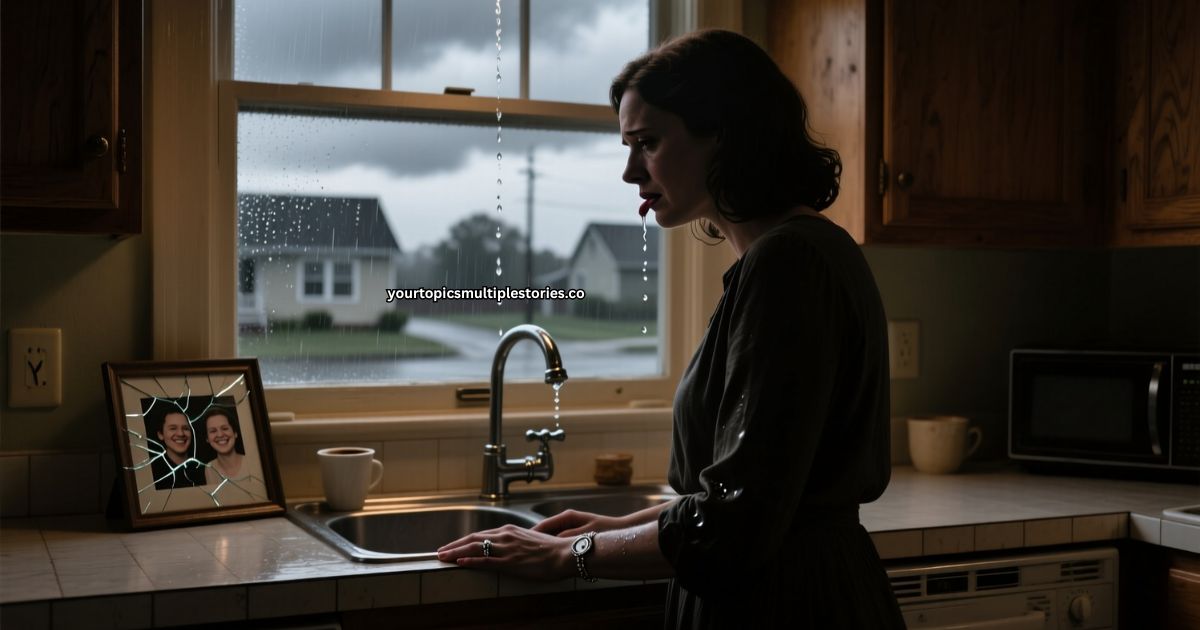
Step 3: Master Emotional Resonance with Senses
Emotional Resonance means the reader feels what the character feels. This is how you keep readers interested. Readers do not connect with big, abstract ideas. They connect with things they can see, hear, taste, touch, and smell. This is the main idea of "Show, Don't Tell."
-
Telling (Weak): “She was sad. She felt her relationship had no hope left.” (This is just a summary of feelings. It is passive.)
-
Showing (Strong): “Her shoulders drooped heavily against the kitchen counter. Her eyes stared at the rain on the window. She did not see the street. She saw an empty future. The small ring on her finger suddenly felt cold and heavy, like a steel cuff.” (This uses body actions, the cold feeling of the ring, and images to show her deep sadness.)
To do this well, use all five senses. Ask yourself about your character:
-
Sight: What does the worried person look at?
-
Sound: Is the room too quiet? Is there a loud, scary noise?
-
Smell: Does the air smell like danger? Or a sweet memory that hurts now?
-
Touch: Are their hands shaking? Is their skin hot or cold?
-
Taste: Do they have a bitter taste in their mouth?
Using these sensory details creates immersion. Immersion is the key thing that keeps a reader emotionally tied to your Story Arc. They will care deeply about how things end.
Use Surprise and Hints
Step 4: Reward the Careful Reader with Foreshadowing
One great tool to Write a Story That Keeps Readers Hooked is to use hints. This creates a sense of mystery. This is called Foreshadowing. You drop small, strange hints early in the story. They only make sense much later.
Foreshadowing makes the reader curious. The trick is to be very subtle. Most readers will not know the hint's meaning right away. But when the big moment happens, the careful reader feels smart. They get a great "Aha!" feeling. This is a powerful reward.
-
Example: Early on, a character talks about how much they hate the sound of wind chimes. It seems like a random detail. Much later, you find out the main enemy is a person who always used wind chimes to signal their attacks. The detail now has a deep meaning.
This technique builds strong Reader Retention. It makes a silent deal with the reader: "Pay attention to small things, and you will be rewarded." It changes reading from a passive task to an active game of discovery.
Control the Story's Speed
Step 5: Manage Pacing: When to Go Fast and Slow
Pacing is how fast you share information. It is the rhythm of your story. Good pacing control is vital for an Engaging Narrative.
When you write about high action, danger, or urgency, you must speed up the pace:
-
Use short, powerful sentences.
-
Use verbs that show action. Use fewer describing words (adjectives).
-
Use lots of white space and short paragraphs.
-
Example: “The car engine screamed. He pressed the gas. Tires spun. Not enough time. They were behind him.”
When you need the reader to feel a deep feeling, think about something important, or learn a major plot fact, you must slow down the pace:
-
Use longer sentences with more descriptive words.
-
Write about the character’s thoughts and feelings. Use deep imagery.
-
Use longer paragraphs.
-
Example: “She stopped walking. Her breath caught in the cold, sharp air of the high mountain pass. She let the huge weight of her choice settle. It settled like tiny ice crystals on her lashes. Every choice she could have made was gone now. Ahead was only the endless, quiet white of the summit.”
Changing the pace keeps the reader interested. It controls their energy. They do not get tired during slow parts. They feel the most impact during the fast parts. This control helps you Write a Story That Keeps Readers Hooked.
Read: How We Organize Our Blog: A System for Managing Multiple Topics Successfully
The Promise Must Be Kept
Step 6: Use the Promise-Payoff Structure
Every article, story, or post makes a promise to the reader. For this guide, the promise was in the title: "7 Simple Steps to Hook Readers." In a novel, the promise is the first problem: "Will the hero save the town?"
The Promise-Payoff Structure means you must track and keep every major promise. Nothing makes a reader angrier than a story that brings up a great question and then ignores it. This ruins all Reader Retention efforts.
-
The Promise: This article promised 7 specific steps.
-
The Payoff: The body of the article must clearly give those 7 separate steps.
In a good story, every major question in the beginning must be answered by the end. The skills the hero learns must be used. The structure must be solid. This solid structure builds trust with the reader. Trust is a core part of an Engaging Narrative.
The Ending Must Stick With Them
Step 7: The Satisfying Conclusion: Make it Resonate
A good ending does two things. First, it solves the main problem of the Story Arc. Second, it leaves the reader with a single, memorable, big thought. This thought must Resonate Beyond the End.
A weak ending just says what happened. A powerful ending makes the story's main idea seem bigger. It gives a universal insight.
-
Story Example: The hero wins. The conflict is over. The final line, though, is not about the victory. It is about how much the fight changed the hero. It suggests that even though the danger is gone, the hero is permanently different. The reader is left thinking about the lasting cost of change.
-
Article Example: You summarize the 7 steps (the solution). The final takeaway is a challenge: "Learning these steps is not hard. It just needs careful attention. You already have the power to write a story that keeps readers hooked. Just be brave enough to rewrite your first paragraph tomorrow."
The final sentence is the last thing the reader reads. It must be the one that forces them to look up and think about the world in a new way.
Conclusion
We have learned seven simple, powerful steps for writing an Engaging Narrative. These steps will help you maximize Reader Retention. Every part matters: from the fast start of the Inciting Incident to the deep feeling left by the final line. This is how you learn to Write a Story That Keeps Readers Hooked.
Remember this: good writing is not luck. It comes from careful choices. You must use small bits of tension. You must use the senses for deep feeling. You must control the story's Pacing. You must always keep your Promise-Payoff Structure.
Which one of these 7 steps will you use first in your next piece of writing?
Find more great stories and writing tips here! (https://yourtopicsmultiplestories.co/).
FAQs (Simple Questions and Answers)
How short should the first hook be?
The first hook should be very short. It needs to create tension and ask a big question the reader wants to answer. Do this in the first 1 to 3 sentences or the very first small paragraph. Hook them fast!
Can I use problems (conflict) in my blog posts?
Yes, absolutely. Conflict drives all good stories. In a blog post, the problem is often the thing the reader is struggling with (Example: "You can't get people to finish your articles"). The story is the path to solving that problem. Stating the problem quickly makes the rest of your post (the solution) very valuable.
Does a short article still need a 'Story Arc'?
Yes, even a short article needs a Story Arc. The arc is the journey of change. In non-fiction, the arc is the reader's journey from not knowing something (Problem) to learning how to do it (Solution). The start raises the issue. The middle gives the steps. The end gives the final answer and a big thought.
What is the biggest mistake writers make that loses readers?
The biggest mistake is telling the reader things instead of showing them. When you say, "She felt angry," you are telling. When you say, "Her fists clenched so tight her knuckles turned white," you are showing. Showing forces the reader to use their mind. This makes them part of the story, and that keeps them reading.